
Industrial sites in Ireland are facing a simple operational requirement. They must transport large volumes of silt, slurry, and sludge with minimal downtime and lower overall project costs. Harbours need routine silt removal to maintain vessel access. Quarries require dependable pumping of abrasive tailings. Wastewater facilities need consistent sludge extraction to meet compliance targets. Industrial plants must clear production waste without holding up processing schedules.
Most traditional industrial dredging solutions are not suited to these conditions. Large dredgers are expensive to mobilise and cannot access confined basins or narrow shoreline areas. Mechanical excavation creates double handling of material and increases transport costs. Many conventional pumps cannot handle fluctuating solids content, and frequent clogging further slows production.
These limitations have prompted Irish operators to adopt more compact, adaptable systems. Excavator- and cable-deployed pumps in Ireland enable material removal from locations that are difficult to reach, where depth varies, and where the equipment footprint must remain small. These systems also eliminate the need for multiple handling stages, as material is pumped directly to the discharge point.
Celtic Pumps and Dredges supplies this type of equipment to Irish industrial, marine, and municipal projects. The company focuses on pumps designed for high-solids, variable-slurry-density, and continuous-duty operation. The priority is straightforward: provide solutions that reduce downtime, increase removal rates, and fit the actual site constraints encountered across Ireland.
Ground-Level Explanation: What Cable-Deployed and Excavator Pumps Do in Industrial Conditions
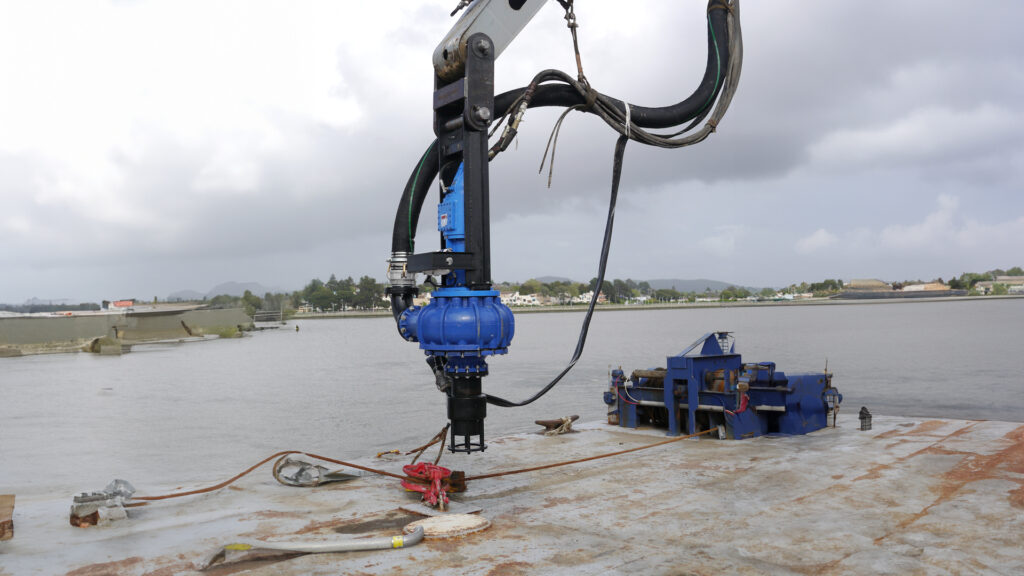
Excavator- and cable-deployed pumps in Ireland serve the same purpose as excavator-mounted pumps. They move high-solids material from the extraction point to the discharge point without requiring mechanical loading or transport. The difference lies in how each system is positioned and controlled on-site.
A cable-deployed pump is lowered into the material using a crane, davit, A-frame, or fixed lifting point. Once submerged, it agitates and pumps slurry directly through a discharge line. This setup is useful when access is limited, side entry is impossible, or depth varies beyond an excavator’s reach. Operators can adjust pump position vertically and horizontally without entering the water and without moving heavy equipment around the site. This makes cable-deployed units suitable for tanks, lagoons, deep basins, harbour pockets, and industrial pits.
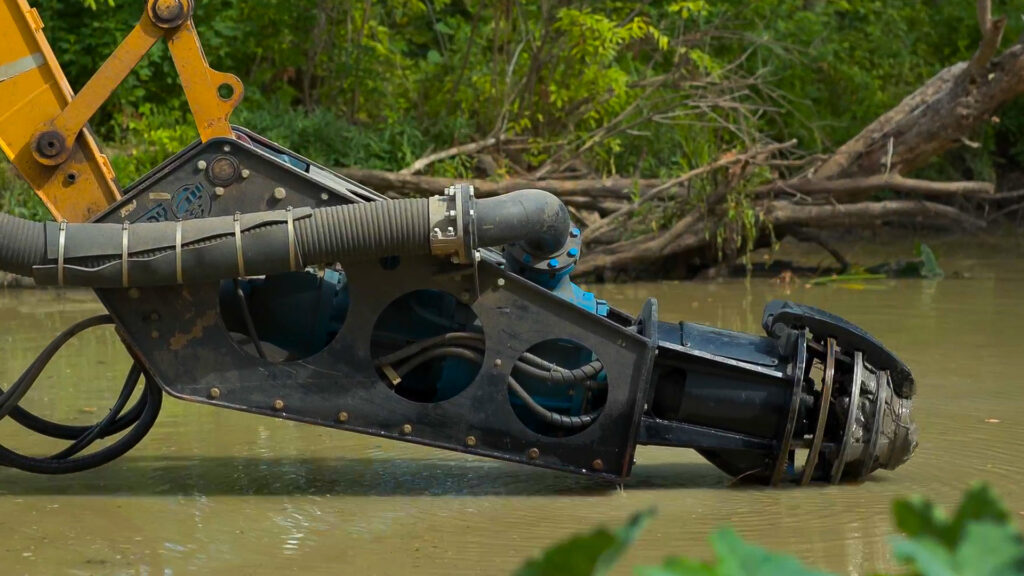
An Excavator and cable-deployed pumps in Ireland replace the excavator’s bucket. The excavator’s hydraulic power drives the pump. This configuration gives the operator precise control over where the pump enters the material and how it is moved through the solids. It is suitable for sites where the excavator can safely reach the removal zone, such as quarry ponds, shoreline sludge, settling basins, and industrial waste beds. Because the excavator already provides reach and mobility, the pump can be repositioned quickly without additional equipment.
Both pump types are designed for high-solids environments. They handle mixtures containing sand, silt, granules, tailings, fibrous sludge, and other industrial by-products. Many models use integrated agitators or cutters to keep solids suspended long enough for pumping, preventing clogging and maintaining consistent flow. This is essential in Irish conditions, where material density and composition often change within the same project.
For industrial operators, the value of these systems lies in their practicality. They reduce handling steps, minimise downtime, and provide predictable performance without bringing in large industrial dredging infrastructure. Celtic Pumps and Dredges supplies these solutions to meet the specific access limitations, solids characteristics, and discharge requirements of Irish industrial sites.
The Irish Industrial Landscape and the Operational Drivers Behind Pump Selection

Versatile dredging pumps for industrial projects in Ireland operate under consistent conditions that influence how industrial dredging and dewatering work is carried out. Each sector deals with material profiles and access constraints that make conventional equipment inefficient or unsuitable.
Ports and small harbours operate within tight tidal windows and have limited space for large machinery. Silt accumulates quickly in berthing areas and navigation channels. Removing it with mechanical excavation requires barge loading, transport, and disposal, which increases cost and extends project timelines. Pump-based removal is preferred when consistent flow and limited disruption are priorities.
Quarry and mining operations encounter abrasive tailings that quickly wear out standard pumps. Tailings ponds often have unstable edges and variable depths, which restrict the use of heavy equipment. Excavator-mounted pumps are selected here because operators already rely on excavators for daily work and can integrate the pump into existing site routines without adding specialised machines.

Municipal wastewater and sludge-handling facilities need predictable solids removal to maintain treatment capacity. Lagoons, settlement cells, and balancing tanks accumulate dense sludge that cannot be moved efficiently with standard centrifugal pumps. Cable-deployed high-solids pumps are well-suited to these environments because they can be lowered into confined basins with precise vertical positioning and minimal setup.
Industrial processing plants, including food, beverage, and pharmaceutical facilities, generate by-products that must be removed without shutting down equipment for extended periods. Tanks and pits in these sites often have limited side access. A cable-deployed unit provides a controlled method to clear material during scheduled maintenance intervals.
Civil engineering and construction contractors require temporary pumping systems capable of handling irregular sludge, excavation water with solids, or accumulated material in cofferdams. These teams prioritise rapid mobilisation and need equipment that fits within restricted working areas.
Across all these sectors, operators look for solutions that reduce the number of steps between material extraction and disposal. They want to avoid double-handling, limit machine movement, and maintain continuous operation. Excavator and cable-deployed pumps in Ireland meet these requirements because they deliver direct pumping from the removal point to the discharge location. This is why these systems are gaining traction in Ireland and why Celtic Pumps and Dredges has focused its offering on equipment built for these specific industrial conditions.
How Cable-Deployed Pumps Address Common Industrial Constraints in Ireland
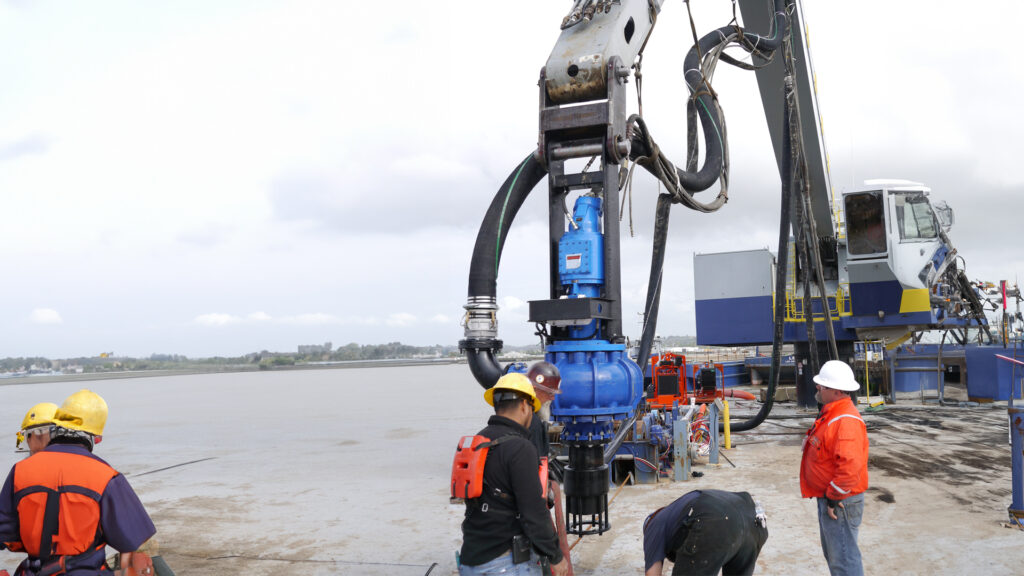
Excavator and cable-deployed pumps in Ireland are selected when operators need controlled vertical placement, consistent pumping in deep or confined areas, and a minimal equipment footprint. These requirements frequently arise for Versatile dredging pumps on industrial projects in Ireland, where access is restricted, or material lies below the reach of standard machinery.
The core advantage of a cable-deployed system is placement accuracy. The pump is lowered directly into the target zone using a crane, davit, or fixed lifting frame. This avoids the need to move machinery along unstable edges, narrow jetties, or reinforced tank walls. Operators can work from safe ground or from a small floating platform, which is important in harbours, lagoons, industrial pits, and wastewater structures.
Depth variability is another factor. Many Irish sites have uneven bottom profiles or accumulated solids that shift during pumping. Because a cable-deployed pump can be raised or lowered immediately, the operator maintains constant contact with the material. This reduces periods where the pump loses suction and ensures higher, more stable output.
Cable-deployed pumps also perform well in areas where direct vehicle access is not possible. Examples include enclosed tanks, deep settlement basins, narrow harbour pockets, small industrial lagoons, and pits surrounded by equipment. The pump is installed vertically, eliminating the need for a ramp or shoreline access, reducing setup time, and avoiding structural modifications.
Material behaviour also supports the use of this system. Irish industrial operations often involve mixtures with fluctuating solids content. In Ireland, excavators and cable-deployed pumps with an agitator or cutter maintain a consistent slurry, preventing clogging and enabling continuous flow through long discharge pipelines.
For operators, the outcome is practical. They can remove material without relocating large machinery, maintain pumping in areas too remote for excavator arms, and complete work with fewer interruptions. Celtic Pumps and Dredges supplies cable-deployed systems built specifically for high-solids performance and limited operational space. These units are configured according to discharge distance, required flow, solids behaviour, and site access, ensuring the system matches the conditions rather than forcing the site to adjust to the equipment.
Why Excavator-Mounted Pumps Are Preferred for High-Volume Industrial Removal Tasks in Ireland
Excavator-mounted pumps are selected when operators require high material removal rates, direct control of pump movement, and the ability to handle abrasive or heavy materials. Many Irish industrial sites already rely on excavators as primary earthmoving equipment, which makes this type of pump easy to integrate into existing operations without additional infrastructure.
The main advantage is reach. The pump replaces the bucket and follows the excavator’s arm movement. This allows operators to access areas that would normally require manual clearing or repositioning of multiple machines. In quarry ponds, shoreline sludge zones, and industrial basins, the excavator can track the material profile and keep the pump positioned inside the highest-density solids layer. This improves production rates and reduces the chance of drawing in excess water, which typically slows down pumping systems.
A second advantage is mobility. Excavators move quickly along quarry edges, lagoon embankments, or industrial pads. When mounted with an industrial dredging pump, they can cover larger areas without downtime caused by repositioning cranes or floating platforms. For sites where material distribution is uneven or where working areas shift as solids are removed, this mobility is essential.
Excavator-mounted pumps also benefit projects with abrasive material. Tailings, gravel fines, and mineral slurries are common in Irish aggregate and mining operations. Many standard pumps experience rapid wear in these environments. Excavator-mounted dredge pumps designed for high-solids applications feature wider internal passages, hardened components, and built-in agitators to reduce clogging and maintain flow even with coarse material.
Another operational benefit is reduced double-handling. Traditional excavation requires loading the material into trucks, transporting it, and unloading it at a different location. An excavator pump moves the material directly through a discharge pipeline, removing several steps and reducing fuel, labour, and machine hours.
For Irish industrial operators, these advantages translate into fewer delays and more predictable output. Celtic Pumps and Dredges supplies excavator-mounted pumps that are configured according to the excavator’s hydraulic capacity and the material characteristics on site. This ensures the pump operates reliably and avoids mismatches that often occur when equipment is not sized correctly for solids density, discharge distance, or site geometry.
Practical Comparison Between Cable-Deployed and Excavator Pumps for Irish Project Conditions
Selecting between an Excavator and cable-deployed pumps in Ireland depends on the site layout, material profile, required removal rate, and required level of operational control. Irish industrial environments often require operators to make decisions constrained by access limitations, depth variations, and production targets. The comparison below outlines how each system fits real project conditions.
Access and Site Geometry
Cable-deployed systems work best where vertical entry is the only viable option. This includes deep lagoons, concrete tanks, settlement basins, narrow harbour pockets, and confined industrial pits. The pump is lowered from above and does not require machine access at the edge.
Excavator-mounted systems rely on reach, so they are suitable for quarry ponds, industrial lagoons with open embankments, and shoreline zones where the excavator can position itself safely. They provide wider horizontal coverage and are more efficient when material spreads across broad areas.
Material Characteristics and Solids Behaviour
Cable-deployed pumps maintain stable performance in fine-silt environments, wastewater sludge, and mixed industrial residues, where depth changes frequently. Vertical positioning helps the operator stay inside the productive layer, especially when solids settle quickly.
Excavator-mounted pumps are typically selected for abrasive tailings, mineral slurries, heavy sand deposits, and other materials where the pump must be moved through dense solids. The operator can physically press the pump into compacted zones, which improves agitation and solids concentration.
Setup, Mobilisation and Operational Time
Cable-deployed pumps have minimal ground footprint and are quick to position once a lifting point is established. They are suitable for projects where access changes are impractical or where space around the structure is limited.
Excavator-mounted pumps minimise overall project time by allowing the operator to combine excavation control with pumping. They require only the Excavator and cable-deployed pumps in Ireland, reducing the need for additional equipment.
Suitability for Long Discharge Lines
Both systems support long pipeline runs, but Excavator- and cable-deployed pumps in Ireland deliver stable output in deeper installations because the pump remains submerged, maintaining consistent head pressure.
Excavator-mounted pumps maintain high productivity in shallow zones where mobility is critical, but discharge stability depends on keeping the pump within the densest material layer.
Efficiency Gains That Industrial Operators in Ireland Can Measure Directly
Versatile dredging pumps for industrial projects prioritise quantifiable results. Excavator and cable-deployed pumps in Ireland provide measurable improvements in working time, labour allocation, fuel use, and overall material removal efficiency. These gains are relevant across ports, quarries, wastewater facilities, and industrial processing sites in Ireland, where consistent output and reduced downtime are essential.
Reduced Mobilisation and Setup Time
Both pump types eliminate the need for large industrial dredging infrastructure. A cable-deployed unit requires only a stable lifting point, and an excavator-mounted pump can be installed quickly in place of a bucket. Reduced setup time shortens project duration and allows work to begin without long procedural delays.
Continuous Pumping Without Material Double Handling
Mechanical excavation creates multiple steps: digging, loading, hauling, and unloading. Pump-based removal sends material directly to the discharge location. This reduces the number of machines involved and protects the schedule from delays caused by truck availability or restricted haul routes.
Stable Output in Variable Solids Conditions
Irish industrial sites often handle varying slurry densities. High-solids Versatile dredging pumps for industrial projects maintain flow by using agitators or cutters that keep solids suspended. This prevents clogging and reduces downtime associated with frequent pump resets or pipeline blockages.
Better Use of Existing Site Equipment
Excavator-mounted pumps leverage equipment already present at quarries, lagoons, and industrial sites. This improves equipment utilisation and reduces the requirement to bring in specialised machinery. Excavators and cable-deployed pumps in Ireland also use existing cranes or lifting frames when available, reducing project costs.
Improved Safety Through Controlled Equipment Movement
Excavator- and cable-deployed pumps in Ireland reduce ground loading on embankments and structural edges, thereby limiting the risk of ground collapse or equipment instability. Excavator-mounted pumps eliminate the need for personnel near the removal zone because the operator controls the entire task from the cab.
Higher Removal Rates in Large Industrial Areas
Excavator-mounted systems can achieve high production output because the operator continuously moves the pump through the material. This is especially useful in quarries, industrial basins, and lagoon cells where material volumes are high and require systematic coverage.
Predictable Project Planning and Cost Control
Consistent pumping rates allow operators to estimate daily production more accurately. When the removal process does not depend on multiple machines or transport cycles, project costs become more stable and easier to control. This supports planning for shutdown windows, environmental compliance deadlines, and harbour maintenance cycles.
Real-World Application Narratives Across Ireland
The examples below reflect common project types in Ireland where cable-deployed and excavator-mounted pumps are routinely used.
Harbour Silt Removal
Small and regional Irish ports carry out regular maintenance dredging to manage siltation. Excavator and cable-deployed pumps in Ireland are used because they can be lowered directly from the pier into restricted berthing zones without bringing in large industrial dredging equipment. This method fits short tidal windows and limited quay space.
Wastewater Lagoon Sludge Removal
Municipal treatment plants periodically desludge their lagoons and sludge cells. Excavator- and cable-deployed pumps are used in Ireland due to limited access around lagoon embankments. They allow vertical placement into dense sludge and steady pumping without moving heavy machinery near soft ground.
Industrial Tank and Pit Cleaning
Food, beverage, and pharmaceutical plants accumulate sludge in enclosed tanks and pits. Excavators and cable-deployed pumps in Ireland enable extraction through openings that excavators cannot reach. This supports maintenance scheduled within tight shutdown periods.
Conclusion
Cable-deployed and excavator-mounted pumps offer Irish operators a practical way to manage silt, slurry, and sludge without relying on large industrial dredging equipment or multi-step material handling. These systems accommodate access limitations, depth variations, and solids conditions typical of Ireland’s ports, quarries, wastewater facilities, and industrial plants. Their value is based on predictable performance, reduced mobilisation time, and the ability to integrate with existing on-site equipment.Celtic Pumps and Dredges supplies and configures these pump systems to match specific project requirements. The focus is on reliable high-solids pumping, stable throughput, and safe operation within confined or challenging environments. For industrial projects that require consistent removal rates and lower operational overhead, these modular pump solutions offer a direct, efficient approach.